Tuesday, November 08, 2011

Difficult decision

We are here once again with one of our occasional "you decide" series. I'll describe the situation the best that I can, let you figure out what you'd do and submit a comment committing yourself to it if you'd like, then in about 24 hours I'll post the end of the story.


My friend Donna (@Cure_MTM on Twitter, Utah State Director for the Poker Players Alliance) was in town for today's induction of Linda Johnson into the Poker Hall of Fame and a Venetian Deep Stack Extravaganza tournament tomorrow, and she was at the Venetian, so that's what I chose as the poker venue du jour in order to catch up with her.

Under-the-gun guy limped. I was next and raised to $8 with A-Q offsuit. I picked up a total of five callers, which was not unusual at this loose-passive table. Pot $45 after rake. Flop was Q-8-4 with two club, of which I had none. First guy checked. I had been prepared to give up on the hand if I missed the flop, because it's just not profitable to play into that many opponents from out of position without having connected. But with top pair/top kicker and not really any draws to worry about except for the clubs, I felt comfortable taking a solid whack at it. In fact, in two previous almost identical situations over the previous 30 minutes or so I had done the same with no opposition--once with an overpair, and once with A-K on a king-high flop, both from first or second position.

Of course, that history cuts both ways. On the one hand, it has proven that these people won't try to fight back very often. On the other hand, if they're paying attention, they might think that I'm continuation-betting every time whether I hit or not--which happens not to be true, but they can't know that, since I didn't show the other times that I took it down.

It is folded to the button. He's the oldest player at the table, relatively tight, but not a classic rock. He has been verbal about how card-dead he has been, and even changed seats once just to try to get dealt better hands. He hesitates a bit, then rather suddenly picks up all his chips and plops them down in the pot. The others fold back to me.

So the question is, simply, call or fold?


Addendum

Sorry, I left out the critical information of his stack sizes. His all-in would be another $102 to me on top of my $35 bet. I have $350 or so in front of me.


Addendum 2

Wow, I must be having a stroke or something--I left out my bet size, too. I bet $35 on the flop. Apologies, all. I'm usually better at describing things than this. (There is actually an explanation, though a lame one. I started this as an all-in-one story, and only later decided to make it a question-and-answer style. I moved the numbers stuff to the second part, forgetting that that data is crucial to readers making a cogent decision.)


Monday, November 07, 2011

Poker gems, #443

Ed Miller, in Card Player magazine column, November 2, 2011 (vol. 24, #12), page 34.


The great thing about the turn is that nearly every drawing hand is an underdog to a decent made hand....

Therefore, whenever you bet the turn, you usually want draws to call. My guess is that statement strikes many of you as wrong. "I bet to get the draws out!" you exclaim. "I sure as heck don't want them calling and drawing out on me!"

Nope. You want them calling. Or at least you should. Because if you're betting so much on the turn that the draws fold, then you're also pricing out many of the weaker made hands. With no draws and no weaker made hands to call, you're getting action only from better hands. which means you're making losing bets. If trying to get draws out is how you think about the turn, then you have it all wrong.

Soft-playing is cheating

I once again feel compelled to write a post in response to something Very Josie has written. In describing a recent trip with Waffles to Foxwoods, she mentioned that she and Waffles had an agreement that if either of them had a big hand, they would bet big so that the other would know to get out. She was upset that Waffles violated this agreement by, among other things, bluffing her. She also said that having some sort of agreement like this was routine for her when she played in cash games with friends. It might take different forms (like agreeing not to get into big pots with each other), but there is usually something put in place in advance.


I wish I could quote directly from the post so that you don't have to take my word for it, but unfortunately Josie has redacted the post to remove that section. (I read it several hours ago, and assumed it would still be there intact when I got around to writing this response.) I'm guessing that this was in response to the criticism she received in the comments.

At the risk of piling on, I think it cannot be repeated too often or too emphatically that such conduct is, to be blunt, cheating. We have an obligation to the long-term good and integrity of the game to denounce it as such whenever we are made aware that it is going on.

Mike Caro writes about this frequently. Here are just two of the columns he has published specifically addressing the problem of friends soft-playing each other:


Here's an extended excerpt from the latter piece:
When someone robs a convenience store, you know who the bad person is. He’s the guy with the gun. As wrong as that is, in my mind it’s not as sinister as a poker partnership. The robber and the convenience store haven’t exchanged solemn promises. With poker partnerships, the thieves usually go unnoticed and nobody knows anything was stolen. Lives can be ruined when unethical players break their promises and directly target the honesty of others who are being fair to them. What’s worse than that? That’s why I have long-ago stated that poker cheaters should be boiled and eaten. If you think I’m not serious, you boil; I’ll eat.

Soft-play friends.

Strangely, many players think they should give friends a break. But when you soft play friends at the table others get hurt in the crossfire.Aggressive opponents, who are playing honestly, especially suffer. That’s because they mistake what’s happening through secret alliances as tactical traits exhibited by the group of friends.This causes those honest players to make poor decisions for the wrong reasons on future hands.Much worse, soft playing often means that honest players get less value when they hold strong hands because some opponents have decided not to participate in order to make it easy on their buddies. Also, honest players may call trying to catch a bluff, not realizing that the opponent would never have bet a weak hand due to a secret understanding with a participating friend.Soft playing friends is cheating. If you want to be generous, win the money through honest play first.Then you can give it away to your friends later.

Best hand.

Some players consider that playing best-hand poker (where partners signal each other and only the strongest hand is played) is a gray area of ethics that isn’t quite cheating. They’re wrong. Playing best hands is a simple and serious form of cheating and the method will usually destroy ethical players. You should never consider joining such partnerships and if asked to participate I believe you should report the players immediately. Tattling may seem uncool, but you have an obligation to other players to keep the game honest. As uncomfortable as it may seem to do this, poker can’t be protected without your help.

Obligation of pros and other players.

Look, we’ve made great advances. Poker has crawled out of the dank corners of taverns and dimly lit two-table card rooms. We’ve survived the era when scammers roamed and ruled. Now poker is in the spotlight, but it won’t stay there unless professionals and other honest players protect our game. It’s no longer enough to look the other way and just refuse to participate.We need to let unethical players know, in blunt terms, that we don’t tolerate any form of cheating, including partnerships big or small. It’s our game and we will defend it. The consequences of tolerating unethical poker are too great; the stakes are too high. Tell them that exactly. If that doesn’t work, it’s time to start boiling the water.
I've written about this, too, though less eloquently. When I saw a published interview in which Chad Brown and Vanessa Rousso admitted to soft-playing each other, and apparently thought there was nothing wrong with it, I wrote a long post explaining exactly why it was a form of cheating and how it hurt the other players:


I stand by that.

Josie, when we play at the same table, whether cash game or tournament, I expect you to do everything in your power to take all of my chips, and I will be doing the same. Whatever happens happens, with no hard feelings. However the chips and cards fall, we leave the table just as much friends as when we sat down.

That is the only kind of agreement friends should have with each other before playing poker together.

Saturday, November 05, 2011

Let's count the mistakes

I played at the Rio last night. When I was directed to a table, the only seat open was #2, so I took it. Good thing. It was so advantageous that in retrospect I'm astonished that nobody else there moved to it when it became available.


Its advantage was all about the guy in Seat 1. He was drunk out of his mind. A friend of his at the table said that he had had about 20 vodka/Red Bulls in the past five hours or so. At the rate he was downing them, I believed it.

He was the classic happy drunk--far more interested in socializing and commenting on everything else going on around him than the game. He always had to be pestered into taking his turn, always had to be told about five times to post his blinds, always had to be told what the action was, etc.

Of most importance to the story, he put zero effort into protecting his cards, despite multiple warnings from the dealer, me, and the other players. He never capped his cards with a chip or other object. This is an especially dangerous habit in the two seats next to the dealer, for two reasons. First, the dealer can sweep one's hole cards into the muck much faster and more easily than from other positions. Second, other players mucking their cards can accidentally run them into unprotected hole cards of Seats 1 and 9 (or 10), thus killing the hand. The other way he failed to protect his hand was that he just lifted his cards in front of his face with no attempt to conceal them. I could see them without even trying about half the time.

As it happened, he quickly developed a fear of playing a pot with me, so I made almost no money from him over the couple of hours we played together. In only one hand was my view of his hole cards potentially going to make a difference. He raised pre-flop with 7h-8h. I had A-Q offsuit and called. The flop missed both of us. He put in a continuation bet. Since I knew exactly what he had, it was an easy call. I didn't raise, because the only decent player at the table was still in it with us. He raised, which foiled my chance at playing the hand as a superuser. Drunk guy and I both folded.

OK, now we get to the crazy hand of the night.

Drunk guy was in the big blind, but, as usual, didn't know it, despite the dealer asking him to post a couple of times. I folded from under the gun. I saw one of drunk guy's cards, a jack. Seats 3 and 4 folded. Just about that time, drunk guy says, "All in." It wasn't his turn, obviously. He still hadn't even posted his blind. Seat 5 pushes his chip stacks forward. He must have heard the all-in announcement, because there's no way he would have just open-raised all-in for $135.

So the first mistake was drunk guy acting out of turn. Second mistake was the dealer not quickly stopping the action and clarifying that that declaration was out of turn and would be binding only if there was no raise in turn from any other player before action was properly back on Seat 1. Third mistake was Seat 5 not understanding all of this, and responding as if Seat 1's action had been in turn.

But wait, there's more!

The next player asked for a clarification of what the action was. The dealer told him that Seat 1 had gone all in out of turn, and Seat 5 was all in. He folded, as did everyone else. Then the dealer, apparently having forgotten what he had just said, looked down at Seat 1, saw unprotected cards and no chips out (he still hadn't posted his blind), and absent-mindedly swept Seat 1's cards into the muck. Let's call that mistake 4.

Drunk guy looks down, trying to figure out what happened, and says, "Hey, where's my cards?" Dealer immediately recognizes what he did. He calls for the floor. While he's looking away, trying to get the attention of the supervisor, drunk guy says loudly and repeatedly that he had had two jacks, and pulls two cards out of the muck that he thinks are his. He turns them face up: a jack and a deuce. He points to the deuce and says, "That one's wrong," and starts rummaging through the muck turning cards face up, trying to find his other jack. Finally the dealer notices what he's doing and puts a halt to it. Let's call this mistake 5.

Meanwhile, Seat 5 says, "Go ahead and find those jacks, see if you can beat this!" and triumphantly slams his pocket queens face up on the table. Mistake 6. Why invite your opponent to get a live hand that has a 20% chance of beating you if you might instead get his chips as a freeroll if he is deemed to be committed to the all-in with a dead hand? Of course, an opponent's approval of muck-fishing doesn't legalize it.

Floor comes over. The correct ruling, in my opinion, should be that Seat 1 is responsible only for the big blind. His out-of-turn declaration is no longer binding once Seat 5 puts in his raise. Since he never moved any chips into the pot, when the action is properly on him, he can call Seat 5's all in, or he can fold. With a dead hand, folding is the obvious thing that any sensible player would chose to do, given the option in that situation--lose the $3 big blind and hopefully learn a lesson from the close call. But instead, the floor rules that the out-of-turn all-in is, in fact, binding. Mistake 7.

Drunk guy accepts this ruling, but clearly does so thinking that he still get a chance to fight for the pot with his long-lost jacks. Mistake 8. Nope. Floor tells him it's a dead hand and instructs the dealer to take $135 from Seat 1 and give it to Seat 5.

Drunk guy is surprisingly sanguine about this. I expected an eruption, but it didn't happen. He quickly resigned himself to it, saying, "Whatever. I don't care. Fuck it."

Floor guy gave him a "final warning" about the f-bomb. (He had issued one previous warning, and the dealers had issued several.) Sadly, about 10 minutes later, one more effenheimer resulted in another call for the floor, and our friend being ejected from the room.

Strangely, this was an outcome that two other players had actively sought, complaining to the floor about how the drunk guy was slowing down the game. Which he was, obviously. But if you're there to make money, having a player like this booted from the game is absolutely the last thing you want to see happen.

When I cashed out later, I told the floor guy how I couldn't believe how short-sighted those other players had been in working to have Seat 1 kicked out. It was like killing the goose that laid the golden eggs. He was sympathetic, and clearly knew exactly what was going on. He told me, "I know! I knew he was the action player in the game, so I tried to look the other way and let him keep playing for as long as I could."

Oh well. I made my money from the other players.


Miscellaneous links

In the last day or two, Twitter has pointed me to several interesting pokery things that I might have missed otherwise.


Annie Duke at The Moth, telling the story of how she grew up in a family of game players, learned to be competitive and not to lose, and how she discovered that poker was her true life calling (about 17 minutes).


"Grinders," an online pay-per-view ($4.00) documentary about playing poker for a living in underground cardrooms. I haven't watched it yet, but Kevin Mathers gave it "two thumbs up," which is endorsement enough for me. For more on the movie and how to see it, go here and here.


Forbes magazine reports on the latest filing from federal prosecutors on the Black Friday case, including some of their legal arguments.


Entertaining article by B.J. Nemeth about the creative things poker players dream up to bet on when playing "Lodden Thinks."


Interesting, sensitive, and self-aware blog post by Terrence Chan about how odd millionaire poker players' conversations and actions must appear to much of the rest of the working world.


Thursday, November 03, 2011

My old friend razz


Points and bragging rights--what more could a guy want?

Well, OK, money. But that's not available.

Out of court

Jury duty ended for me yesterday. Case submitted to jury at about 4:30 pm. I was designated as an alternate, and none of the regular jurors had been absent, so I was not to be included in deliberations unless one of them had some emergency and couldn't finish participation in the deliberations. They decided to go home and start fresh in the morning.


I just got a call from the court telling me that the case is over, I won't be called back in, and I'm released from admonition not to discuss it. To my great surprise, the jury was deadlocked, and it's a mistrial--after what couldn't have been more than about four hours of deliberation! I don't think I've ever heard of a jury being declared hopelessly deadlocked that quickly. Usually the judge lectures and pressures them to give it another try a time or two before throwing in the towel.

I'm even more surprised because by the conclusion of the case, I could see no way to acquit. I stood ready to be convinced by my fellow jurors that there was some plausible, innocent explanation for the mountain of incriminating evidence, but I thought it unlikely that that would happen. I would admit that there was some theoretical way that one might connect the dots other than in the straight line they seemed to make, but no reasonable or plausible way to do so, unless there was something I was overlooking. I really thought that when we did the initial poll, results would range only from "leaning guilty" to "throw away the key."

Now I will spend the rest of my life wondering how many and which of them thought the prosecution had not proven the case, and how they reached that conclusion, when it seemed to me to be about as close to open-and-shut as it could be. My hunch, after watching them for three days, is that a few of them just weren't paying close enough attention to the myriad details. It was a lot of dry presentation of documentary evidence, and I suspect that some of them tuned out, failing to grasp the truly damning implications of the numbers and signatures on the mountain of paperwork. (It was a case of defrauding the federal government, so naturally the case turned on what the papers contained.)

Once again I'm faced with plain evidence that I just don't see things the same way that the rest of the world does.

How did I not make this list?

http://forumserver.twoplustwo.com/189/thats-what-she-said/top-10-hottest-guys-poker-1121453/


It's inconceivable, really.

Four royal flushes in one hand

A story from TBC's blog, here.

an interesting thing in the eldorado [in Reno] the other morning, and a dealer ended up getting fired. i wasnt at the table but i could hear em on the other table. (i was in the NL game before it broke for the morning tourney, and this was at the STUD table.) seems while the players (all 4 of them) were taking a break, the dealer thought it would be funny to setup the deck to give all 4 the royal flush. essentially no one would be getting hurt, and all get back their money. now everything was going according to plan, and suddenly one old man was screaming how he had a royal flush and wanted his money. the other players told him they ALL had the royal, and i dont know if he was senile, or didnt believe them, but he insisted the floor call gaming, and it seems he eventually got paid and the dealer got fired. i know it seems hard to believe but if u come here u will find out its true. lots of witnesses even dealers at other casinos know about it.

Monday, October 31, 2011

On trial

I had to report for jury duty this morning. I thought that most likely I would be dismissed and life would go on, but I ended up being empaneled. So life kind of goes on hold for the next several days.


I'd tell you about the case, but then I'd have to kill you.

Poker gems, #442

Ralph Waldo Emerson.


Win as if you were used to it, lose as if you enjoyed it for a change.

Verbal is binding. Or not.

Late last night I was playing at the Golden Nugget with two friends. Poker Lawyer was on my left, Jen across the table. (The ladies love me, ya know. P.L. even dropped trou for me before she left town. OK, it was via Twitter, but it still counts.)


I had 4d-5d on the button, and so joined a chorus of limpers. The flop was 9-4-5. P.L. checked, next guy bet. I think it was $11. I decided to just call. This was partly slow-playing, partly waiting to be sure P.L. wasn't going to put in a big check-raise after having flopped a set or bigger two pair. She folded, so I was heads-up.

Turn was another 4, filling me up. Guy checked. I bet $22. He called.

I don't remember the river card--a jack maybe? Anyway, it didn't seem to change anything. He checked. As I was reaching for chips, he said, "I call."

It's getting rare that I'm faced with a poker situation that is new to me and that I don't know what to do about. I was sufficiently confident of having the best hand that I would have been willing to get my whole stack into the pot if I thought I would get called. But would he actually call? I wasn't sure of that.

My first impulse was to ask the dealer to call the floor over and get a ruling on whether my opponent's call was binding. If it was, I'd move all-in. But in the roughly five seconds I took to think about my options, I decided it was most likely that the floor would decide his declaration was done out of turn and was therefore not binding, and the very process of trying to get him hooked for his whole stack on that basis would show him how badly I wanted a call, he'd fold, and I'd end up with nothing.

I decided instead to proceed as if he hadn't said anything. I made a standard-sized value bet, about 2/3 of the pot ($45), and he called. He flashed a 9 before mucking.

The questions raised are: (1) If I had stopped the action after he said, "I call" but before taking my turn, what should the floor decide? I.e., is he committed to calling whatever I bet up to the full amount of his stack? (2) Strategically, what is the best way for me to have handled that--as I did, or take a chance on the floor saying that he is committed to a call no matter what I bet, which wins me his stack, or some other approach that I haven't thought of?

I think if he had been deeper, I would have taken a shot at the floor ruling. But as it was, his river call was for about half of what he had left, which means that the potential gain wasn't a lot more than I stood to make from ignoring his words.

He was a very experienced player. He demonstrated thorough understanding of the rules of the game. He knew how the blinds changed when players moved in or out of the game, for instance. In fact, the way he talked early in the session had made me think he was likely an off-duty poker dealer, though I never got explicit confirmation of this. I feel about 99% confident that this was not an accidentally premature call on his part. I think it is much more likely that it was essentially a verbal version of the grabbing-a-stack move I discussed recently, here. He has probably either done this himself on previous occasions or seen it done, and has reason to believe that if it comes to a floor decision it will be ruled non-binding. If so, then I would label it as angle-shooting, a way of pretending to call without actually committing any chips.

I understand that before I got into poker, a common angle-shot was this: a player wanting to inhibit a bet or raise from somebody to his right would announce "raise" out of turn, but then check or call when action actually got to him. That was quashed by instituting the rule that out-of-turn action would be binding if the action to the player in question did not change between when he announced his action and when it became his turn.

If applied here, that would probably not commit my opponent, because, the argument would go, in between his verbal announcement and when he had to actually make his decision, the action had changed by virtue of my bet.

So I'm still not sure what the ruling would be if I pressed for one, nor how I should have handled the situation. I'd like to get it figured out before the next time I'm faced with it.


Addendum, October 31, 2011

I asked Matt Savage via Twitter how he would rule in this situation. He replied:
cash game rules vary, I can guarantee you I am charging him something to get him to stop this angle, probably size of turn bet.

in tournaments the @PokerTDA has added a rule for conditional statements so we have latitude to make him call your whole bet.
He is referring to this rule, added earlier this year:
47: Conditional Statements
Conditional statements regarding future action are strongly discouraged; they may be binding and/or subject to penalty. Example: “if – then” statements such as "If you bet, then I will raise”.
I knew of this change but hadn't thought of applying it here. But on consideration, it does seem pretty reasonable (if you ignore the cash game/tournament distinction). His statement was functionally equivalent to "If you bet, I will call."

Thanks to Matt for his quick response.


Saturday, October 29, 2011

Time Warp

I was just walking through downtown Vegas when a cover band started up with a familiar tune. Presented here so you can take the same trip down memory lane to the late 1970s that I did.


Thursday, October 27, 2011

I don't know what to say

I just looked at today's installment of "+EV." I've been reading this poker-themed web comic strip forever and generally like it. But today? Stunned is all I can say.


Go take a look.

I'm hardly the most politically correct or oversensitive guy on the planet. But explicitly and casually lumping together Africa, blacks, and tribal cannibalism, and expecting that readers will find in it light amusement, demonstrates an ear far deafer to contemporary sensibilities than I think I can be accused of ever having been.

Didn't humor of this variety die out about the time that Amos and Andy went off the air?


Addendum, October 28, 2011

As commenters have noted, the link above no longer works, and the cartoon in question appears to have been taken down from the site. The archive is here, and the one for October 26 doesn't show up there. I have no knowledge of what happened, but since the comic's author submitted a comment here defending his work, I doubt that he had a sudden change of heart. Given that the series is sponsored by a prominent online poker site, I would venture a guess that the sponsor was displeased to see its name on that particular strip and asked that it be removed.

I saved a screen shot of the page, anticipating that something like this might happen. (Somehow the top edge and a few words of the text got cut off, and I didn't notice it until now.) I didn't post this at first because I preferred to direct traffic to the site of the original. But since it's not there anymore, there's no way for people to see what I was describing. For that reason, I post it below.

Jumble

Shamus pointed me to today's Jumble, which is poker-themed, here. It took me 13 minutes to solve it.

Heart Attack Grill


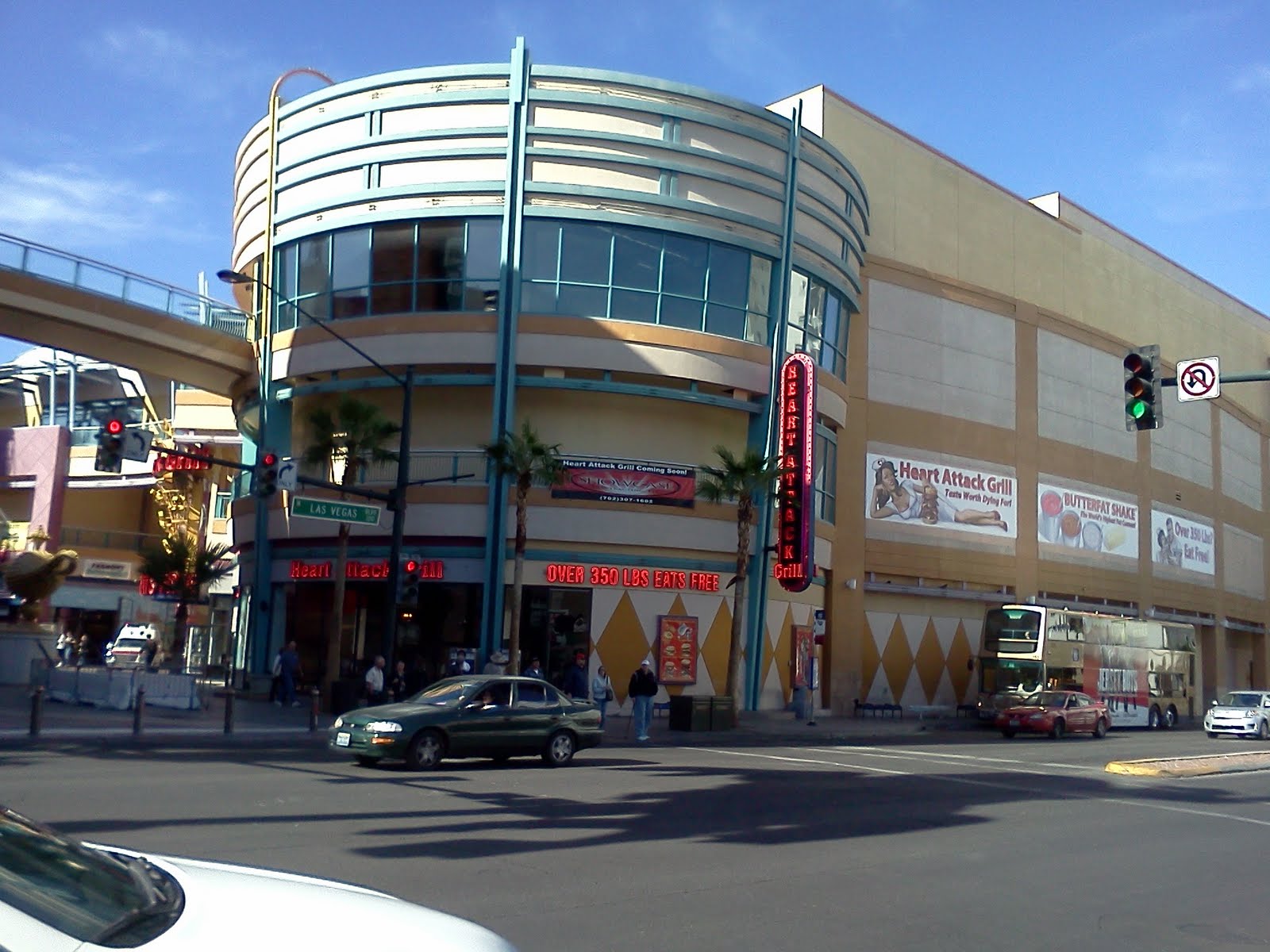
Today I met a friend for lunch at the new Hash House a Go Go inside the Plaza downtown. On my walk there, I passed another new restaurant that I don't think was there last time I went by. It's the Heart Attack Grill. As you can see from the big sign that hangs outside of it, if you're over 350 pounds, you eat for free. Their waitresses are dressed as nurses, and customers are given hospital gowns to wear while they eat. The burgers--which seems to be the main fare on the menu--are graded single through quadruple "bypass." You can get a side dish of "Flatliner Fries." Etc.

I'm not sure whether to be amused or appalled by the whole thing.

That word "folded" there is just so sad


I must remember never to fold anything.

Tuesday, October 25, 2011

Not happy with Poker Tracker


I'm still in the free trial period for Poker Tracker 3, and I'm sure glad they offer one, because I'm not feeling inclined to buy it, and if I had paid for it, I would be getting even more irritated with the product than I am now.

It's buggy. At least three times the HUD has vanished for no apparent reason in the middle of a game (or two or three), and the software won't respond to any commands. I have had to resort to the Task Manager to force it to shut down, then restart.

It also occasionally does weird things such as shown above. I was doing two SNGs at a time, as I commonly do. It seemed to be working normally, but then the HUD blinked off on the game on the right. It took me several minutes to notice that the HUD on the game on the left had changed in a rather important way at the same time: It was now showing me stats for the seats on the right-hand game! If you look closely, you can see that the names in the HUD match the corresponding seats in the other game. If I had changed the display to omit the players' names in order to save screen space, as one commenter suggested when I first installed the program, I would never have noticed this, and would have been relying on completely false numbers. That is completely unacceptable. Erroneous data is far worse than no data at all.

And it does compile erroneous data. In one game, I raised the very first hand with K-K and won, but for another 20 hands or so, until I raised pre-flop for the second time, it continued to show my pre-flop raising percentage for that table as zero. Yes, Tracker had been on and set to import hands well before the SNG started. That makes me wonder what else it's missing or getting wrong that I haven't noticed.

The HUD blinks off for several seconds when it's updating. Annoyingly, this is often right when I need it most, when somebody has put in a raise and I want to evaluate how much weight to give it. BOOM--HUD is off for five seconds or so, and I don't know how long until it will be back. Extremely irritating.

I had heard that one needed to do periodic maintenance on the database in order to keep it from getting bogged down. I went to the web site for "how-to" instructions on this. The options for how to do this maintenance were baffling. I'd like to think that I'm a pretty smart guy, and I definitely have more education than any decent person needs. But I could not make heads or tails of what this section of the FAQ was trying to tell me to do, nor why.

Similarly, I had noticed a feature about marking hands for later review. Great. I figured out how to mark one during a game. But then I wanted to find it to, y'know, do the "later review" part. Checked all the menu options and tabs I could find--nothing. Went to the web site, finally tracked down a couple of places where people were talking about this feature in the forums. Apparently I am not the only one to be confounded by how to employ this feature, because there was more than one question about "where are the marked hands?" But even when I tried to follow the instructions provided, I couldn't. I simply could not find the sequence of steps/options they were trying to get me to follow. Again I emphasize that I'm not a generally dense or helpless person. I can nearly always get computers to do whatever I need them to do, and I can follow directions as well as the next guy. If I can't figure out how to do something that should be incredibly simple--like find a hand marked for later review--even after I've read your instructions, then the software is badly designed, the instructions are poorly written, or both.

My final gripe is that the HUD doesn't do one of its most basic tasks consistently, at least on Bodog. If there is a bet and call on the river, the little "after-image" display will show only the hand(s) that Bodog showed itself. If the loser mucks without showing, the HUD will not display those cards, even though I can retrieve that information by going into Bodog's "last hand" history. In other words, the data is there, but not displayed. The ability to skip the time-consuming and distracting step of opening the last-hand history page was one of the chief reasons I wanted a HUD in the first place, and the damn software won't do it consistently.

I know that this is a very powerful analytic tool. Maybe I have something set wrong. But good software design makes at least the most basic and commonly used features easy to find and use. With good design, a user should be able to ask himself, "What would be the easiest or most obvious way to make X happen?" and then find that, lo and behold, that is exactly what works. Tracker has not even a trace of such thoughtful design. Most likely there are solutions to all of my problems, were I to invest enough time to learn the ins and outs, and navigate the thicket of bewildering menu options. But I don't want to. I want to play poker, I don't want to play Poker Tracker. It's supposed to be a tool that helps me, not something that requires more attention than the game itself. Tracker may be like the power of a snarling Lamborghini, but I really want something as simple and reliable as a Toyota Camry. I'd happily forego a complex feature set for ease of use and dependability.

The bottom line: In addition to being buggy and unreliable, the program is complex, obtuse, opaque, and mysterious even when it's working the way it's supposed to.

It's time to download Hold'Em Manager for its trial period and see if it's any better suited to my needs and expectations.

Sunday, October 23, 2011

"See a lot of cheap flops"

My friend Josie posted about a big tournament she recently played at Foxwoods, here. She says, "My modus operandi was to try to see alot of flops on the cheap and early. My guideline for these cheap flops was that I had to hit better than one pair to keep going otherwise muck after the flop."

What follows is the comment I left on her blog. But after submitting it, I decided that I might as well post it here, too, since I spent some time writing it, and perhaps readers will find it useful.

You didn't ask for my advice, but I think that is a lousy plan.

One of the best gems of poker wisdom I've ever come across is this, from John Vorhaus: "There's nothing more expensive than a cheap flop." (http://pokergrump.blogspot.com/2008/08/poker-gems-155.html)

The first problem is that if somebody raises behind you, you are faced with choosing between (A) abandoning the chips you already put in, or (B) playing a weak hand against a raiser from out of position. Not a very attractive pair of options, is it?

The second problem is that you are relying on hitting a hand in order to win. So is everybody else limping in. You have no better chance of flopping a monster than anybody else. Playing this way levels the playing field and eliminates whatever edge in skill you might have. You're turning a poker tournament into a game of bingo.

The third problem is that the great majority of the time you will not flop a monster, and you'll have to fold. This is a big leak of chips. Ever seen a water bill when you had a leaky faucet you didn't know about? Drip, drip, drip, one big blind at a time, your stack leaks down the drain. It is mathematically demonstrable that over the long run you will not win enough when you hit to make up for all the small losses you take along the way.

As a general rule, calling (preflop or postflop) should be your LAST option. There are definitely situations where it is the best route, but you should always first try to find a reason for an aggressive action (bet or raise), secondly consider folding, and only if it's clear that neither of those is optimal consider a call. You are turning that basic, sound, universal strategy on its head by making a call your first choice.

I defy you to find any well-regarded tournament strategy book or successful tournament player who advocates the approach you're describing. I'd bet you $100 you can't find one. There's a reason for that: IT'S A TERRIBLE STRATEGY THAT ONLY WEAK, LOSER PLAYERS EMPLOY!

Don't be one of them.
Now that I'm in my own forum, I can add a couple more thoughts.

Yet another disadvantage of this plan is how transparent it makes your hand when you do finally catch a flop. Opponents know that you're limping a lot, but you're presumably still raising with your best starting hands. Ipso facto, they know even before the flop that you don't have a big pair, A-K, A-Q, etc. They also know that when you limp, this is followed by a fold on most flops, which sets you up to be bluffed the 98% of the time that you don't flop two pair or better. If you do bet or play back at their flop bet, they'll know you have a real hand, and they can give up with only a small loss--which means only a small win for you.

Josie's post gave a concrete example of how this knowledge can be used, though in this case to her advantage. She had 10-6 on the button, with a flop of A-A-6. She called down a bluffer, confident that he didn't have an ace because he didn't raise pre-flop. Fine. But others can use exactly the same logic against you. You can't credibly represent having the ace the same way you could if you had raised on your button in that spot.

A far, far better strategy is frequent, small raises. Make the same size raises with, say, 20% of your starting hands, consisting of a mix of big pairs, unpaired Broadway cards, small pairs, suited connectors, and a few random fliers, and your opponents will never be able to know whether you're betting the flop for value, as a bluff, or on a draw. When they are reduced to pure guessing about your hand, they will make a lot of mistakes, which translates to chips going your way.

An alternative to making exactly the same size raise every time (say, 2.5 big blinds) is to vary it according to your position and the number of players who limped in ahead of you. That is, you generally want to play bigger pots when you have better position, smaller pots when out of position, all else being equal. You can also sensibly raise more after a bunch of limpers than when everybody has folded to you, because the pot has already grown, and you want to make the pot odds less attractive for the bottom-feeders. But the size of your raise should never be dependent on the strength of your down cards. Bet sizing tells are among the easiest for opponents to spot patterns in.

Limping begets limping. You may be excited when your 6-5 offsuit hits a 9-6-5 flop, but the guy who you let in cheap with 9-6 likes it even better, and may take your whole stack. He would have folded if you had raised with your little connectors.

Limping makes exactly nobody afraid of you. Limping never forces your opponents to make a difficult decision.

Finally, consider this: You never win the pot pre-flop by limping. You can never steal the blinds with a limp. You never induce a better hand to fold by limping.

I certainly understand the appeal of the "see a lot of cheap flops" approach. It's low-risk, loses chips only slowly, and once in a while scores you a big pot. It also is relatively simple to execute, requiring few hard decisions. But it simply cannot succeed over the long run. When it works, it's by sheer dumb luck going your way. That's no way for a skilled player to take on the game.

Not only does this make you look like a weak player, it actually turns you into a weak player. I don't think there is a single thing to recommend it.

My thinking on this subject was changed forever by reading a great column by Ed Miller, back in December of 2008. It's available online here, and I highly recommend it. He's talking about cash games, but the same principles apply to tournaments. Choice excerpts:
So, your [limping] strategy must rely mostly on making a hand and getting value for it. Unfortunately, that's the same strategy that your opponents will have. And that's the fundamental problem with overlimping; it creates situations in which you and your opponents are all playing roughly the same way. When everyone is playing the same way, no one has an edge....

The bottom line is that when you overlimp, you're mostly hoping to make a hand and win a big pot, and yet it's hard to stack someone or otherwise win a big pot when the hand starts out limped seven ways. And to top it off, your opponents are also hoping to make a hand and win a big pot, and they're almost as good at doing it as you are. So, you just don't have a whole lot of edge....

When seven people see the flop in a limped pot, everyone is playing "make-a-hand" poker, and you don't have it much better than anyone else. But when you raise preflop and only one or two people call, often your opponents will be playing make-a-hand poker while you will be playing "I win if you don't make a hand." This scenario can offer you a much more significant edge over your opponents....

Overlimping is not at all universally bad. It keeps you in the hand and gives you some chance to win a big pot. And in very aggressive games where people are raising and reraising like crazy, overlimping can often be your best play.

But when the game is passive and many pots are being played five-, six-, or seven-handed for the price of the big blind, overlimping often handicaps you. It forces you to play primarily make-a-hand poker, and therefore it deprives you of many of your potential edges. Try raising instead. Doing so can tilt many pots to your advantage and enable you to exploit much larger edges. The bigger your edges, the more money you'll make.
When I first read this, the phrase "make-a-hand poker" instantly struck a chord with me. It's one of those little nuggets that lodged deeply inside my brain. I will occasionally now catch myself playing this way (especially if I've stayed at the table for too long and I'm feeling fatigued), and that phrase will leap to the front of my mind as a self-scolding: "You're playing make-a-hand poker again, aren't you?" It will usually cause me to either return to my tight-aggressive baseline game, or decide that my A-game is gone and it's time to go home, both of which are much better choices than to stay in the loose-passive rut.

So, Josie, if you find this way of thinking about the "see a lot of cheap flops" game plan enlightening, divide your thanks between Ed and me.


Guess the casino, #1019


To reveal the hidden answer, use your mouse to highlight the space immediately after the word "Answer" below.


Answer: Trick question! This is Casino Estoril near Lisbon, Portugal. With thanks for photos submitted by reader "VegasDWP."